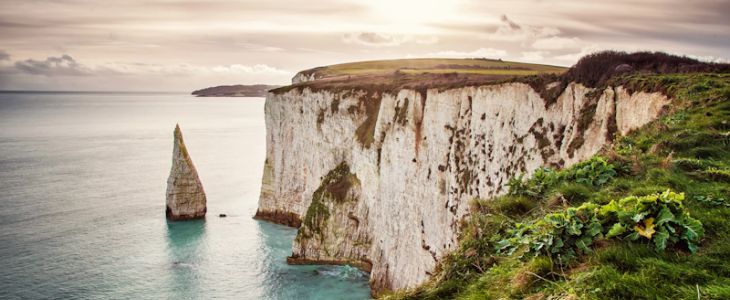






Being a Harry Potter Fan While Studying in the UK
If you’re anything like me, being in the UK was a dream come true because it meant that I could explore EVERYTHING Harry Potter. Every castle/estate was Hogwarts, every train was the Hogwarts express, every stray cat was Professor McGonagall (the list goes on and on). It’s fun to explore the inspiration behind the series and there are many websites dedicated to the various filming locations from the Harry Potter and Wizarding World franchises.
There are also certain items that will be on every travel/tourism site regarding Harry Potter such as the Harry Potter Studio tour, the Harry Potter shop at King’s Cross, etc. While it’s important to see these items, they’re probably already on your wizarding checklist. With the following items, I’m hoping to expand your list and enlighten you to some maybe lesser known magical items and locations that will satisfy your inner wizard as well as give you some tips and tricks that I’ve learned along the way. This will ensure that you’ll be able to check off everything on your wizarding checklist without spending all your galleons.
Here is our breakdown of 5 essential experiences every Canadian Wizard should experience while studying in the UK:
1. Back to Hogwarts Day
Location: London (King’s Cross Station)
The Hogwarts Express leaves King’s Cross Station on September 1 at 11am sharp.
When I initially arrived in the UK to begin my studies, the Hogwarts Express was long gone. But you better believe that I was standing in King’s Cross station at 11am the following September! As far as I can tell, whether something happens or not at this time within the station is random. When I was there, there was no announcement, Wizard additions to the departure boards or anything of that sort but I know in other years there have been (especially during the promotion of the Fantastic Beasts films). It’s still fun wander around and pretend that you’re leaving for Hogwarts.
While you’re here: Check out the Harry Potter Shop at Platform 9 ¾ and (if you don’t mind waiting) take your picture going through the wall between platforms 9 and 10! Keep in mind that there is a cost for having the professional photos taken.
Pro tip: If the lineup is too long for your liking, and you’re planning to go to the Harry Potter Studio Tour, there is also a photo opportunity here for the trolley passing through the wall! The trolley is on the way to the Hogwarts Express portion of the tour so there is no additional cost for you. It’s a great alternative AND you can tour the real Hogwarts Express coaches afterwards.
2. The Cursed Child
Location: London (Palace Theatre)
No matter what your opinion is of Harry Potter and the Cursed Child in terms of where it stands in the overall Harry Potter canon, The Cursed Child is something that EVERY Harry Potter fan should experience. It’s a truly magical production and a new way to immerse yourself within the world itself - there’s a reason why it’s won so many awards around the world!
While you’re here: Around the corner from the theatre you can visit House of Minalima (located on Greek St) to see incredible graphic art from the Potter films.
Pro tip: If you think this may be out of your budget, the London production offers a “Friday 40” EVERY Friday where you can enter to win the opportunity to purchase tickets for the following week of performances for the low price of £40 (£20 per part).
If you don’t end up getting tickets, you can always take pictures outside of the theatre.
3. Pub Quizzes
Location: Wherever your local pub is
Something fun to experience while you’re studying for your OWLs or NEWTs is a Harry Potter themed pub quiz. All pubs are different in terms of if they offer quizzes/what those quiz themes are but chances are if you find a pub that offers quizzes, they’ll probably have a Harry Potter theme eventually! This is fun to do with a group of friends and is a great opportunity to test your wizarding knowledge over a butterbeer! You’ll also be around fellow Potterheads and get to come up with witty Harry Potter-themed team names (Mine was Harry Potter and the Canadians in London). Many of these pubs will also give the opportunity to win some fun Harry Potter themed merchandise/prizes.
These events may have a small registration/cover charge for your team to ensure its place.
Pro tip: These events usually have a limited number of seats available! So, if you see one happening at your local pub you may want to inform your fellow wizards and register your team quickly.
4. Quidditch in the Muggle World
Location: Across the UK
There are many instances where the wizarding world has crossed over into mainstream muggle world. Perhaps the most prominent instance of this crossover is seen with the development of minor league Quidditch teams. Taking the rules created by J.K Rowling, and utilizing your everyday broomstick, teams have popped up all over the world to play this whimsical sport.
Many Across the Pond partner universities have their own teams that take part in matches and tournaments! This means that if you happen to be going to one of our partner universities, you can spectate, try, or even join a real quidditch team! To make things even more magical, the teams often utilize Wizarding World puns within their names.
5. Trace the Origins
Location: Edinburgh
The Elephant House is a little coffeeshop located in Edinburgh. If you’re studying in Scotland, or want to take a trip during your studies, make your way to this little coffeeshop where JK Rowling spent time writing much of the earlier novels in the Potter series.
While you’re here: Visit the Greyfriars Kirkyard, less than a block away from the café. If you do a walking tour here, you’ll hear about all the Harry Potter inspiration that JK Rowling took from the names on the gravestones. You can still visit without a walking tour, and you can find out where to look for the Harry Potter spots of interest online!
Bonus Pro Tip: Harry Potter Merchandise
Location: Across the UK
It is SO tempting to buy every single item that’s available at The Harry Potter Shop at Platform 9 ¾ but the truth is, all of that merchandise can add up! Instead of stocking up here (or even at the gift shop when you visit the Warner Bros tour) you can also find a wide selection of Harry Potter merchandise at Primark shops around the UK. With everything from keychains, to tees, Hogwart’s house PJs, home décor and MORE you can save significantly by shopping here (items are as low as £1.50!).

5 Reasons Why You Have to Visit the Scottish Highlands
The Scottish Highlands are my favourite place in the world. It’s not just the outstandingly beautiful scenery or the warm, friendly people. There’s something magical and ancient about the Highlands that you can feel when you are there. Here are my top 5 reasons to visit the Scottish Highlands!
1. Beauty
Starting off with the obvious: The Highlands are stunning. The Highlands have it all – immense mountains, sparkling lochs, and the rugged beauty of the stretching fields and landscapes. Surprisingly, it’s not just green moss and grey skies. There are places in Scotland that look positively tropical! Being part of an Island, Scotland not only has inland waters but also coasts, where there are sandy beaches and blue waters. I could sit and enjoy looking at the natural terrain in Scotland, soaking in the sublime, all day long! One of my favourite places in The Highlands is the Isle of Skye – if you pay a visit, I promise you won’t regret it.
2. Outdoor Activities
There are many ways to take advantage of the landscape in The Highlands. You can hike, mountain climb, ski, snowboard, surf, and explore national parks and historic sites! From the mountain-scape of Ben Nevis to the waves in Thurso, there are no shortage of ways to get your adrenaline pumping in The Highlands.
3. History
Are you a fan of history? Castles? Museums? The Highlands are stocked with not only castle ruins, but functioning castles and heritage buildings that take you back in time. While you are studying in the UK, consider a short trip to places like Eilean Donan Castle, Urquhart Castle, or the charming Kisimul Castle in Castlebay (it’s literally a castle on a small island in a bay). Many castles in The Highlands are the ancestral homes of the Clans, and visiting these spots gives you the sense of the many people who inhabited them over the centuries. For a history buff like me, there’s nothing quite like it.
4. Culture
The Highlands have much to offer in the way of unique culture. There is a warm sense of hospitality, which lends itself particularly to the food and drink. You can’t go to The Highlands without having a wee dram of whisky, or trying Scotland’s best known delicacy - haggis! Don’t worry, there are vegetarian haggis options too. I personally recommend trying vegetarian haggis!
5. Magic
As I said, there is something magical about The Highlands. The land is steeped in folklore and legend, including tales of Kelpies (a water horse), Selkies (creatures who could transform from humans into seals), and the Bean-Nighe (a fairy woman, considered to be an omen of death). You may have heard of a little-known legend that tells the tale of a mysterious being, said to inhabit the waters of Loch Ness. That’s right, Nessie! The Loch Ness Monster has brought tourists by the thousands to the shores of Loch Ness just south of Inverness. The Highlands definitely feel ancient and mysterious. In my opinion, on a misty and grey day, the lines between this world whatever else is out there become rather blurred.
As I said, there is something magical about The Highlands. The land is steeped in folklore and legend, including tales of Kelpies (a water horse), Selkies (creatures who could transform from humans into seals), and the Bean-Nighe (a fairy woman, considered to be an omen of death). You may have heard of a little-known legend that tells the tale of a mysterious being, said to inhabit the waters of Loch Ness. That’s right, Nessie! The Loch Ness Monster has brought tourists by the thousands to the shores of Loch Ness just south of Inverness. The Highlands definitely feel ancient and mysterious. In my opinion, on a misty and grey day, the lines between this world whatever else is out there become rather blurred.

Making the Most of Your Summer Break in the UK
For those students studying an undergraduate degree in the UK, you will normally have a break over the summer months! For those students on a master’s degree, you will usually write your dissertation during the summer.
For both situations, I’ve written about some of the best ways to take advantage of your summer break while living and studying in the UK.
Undergraduate Students
During your summer holidays, you may choose to come home, but if you feel comfortable enough to stay in the UK, I highly recommend it! You can work on a student visa, and in non-term time (aka the summer!) you can work up to 40 hours a week*. Whether you work part-time or full-time, it’s a great way to not only make some extra money but also meet new people. Take advantage of university career centres or temp agencies to find a position! The university staff in the career or international offices are a great help when it comes to finding work, and career advice in general.
Summer is a great time to investigate your university’s unique opportunities, since you may not have had time to do so while you were studying. Look into clubs and societies that you may want to join in your next year of study, events that go on during the summer months, or ways to get involved on campus! You have at least 3 years of an undergraduate to complete, and while you may have taken your first year to ease in, the rest of your time spent in the UK is a great chance to participate in your university’s social communities.
Finally, take the opportunity to travel. If you have the means to explore Europe or the rest of the world, fantastic! My advice to everyone, though, is take the time to explore the city you are living in (galleries, concerts, festivals, markets, shops, museums, etc!) as well as the UK itself. There are so many amazing places to visit in England, Scotland, Wales, and Northern Ireland, so don’t forget about travelling around the UK while you plan your trips!
Postgraduate Students
For postgraduate students, summer looks a little bit different. Most students will be writing their dissertations, and while not in classes, there is much time that needs to be devoted to this endeavour. This is not to say you don’t have the opportunity for summer activities!
Working part-time or even full-time can be an option while you write your dissertation. Take it from me, I worked full-time over the summer, and it helped me to be more organized because my time off needed to be spent wisely. Working in the UK is a great opportunity to meet new people outside of uni, as well as build your CV for future job applications.
Spend time to act as a tourist in your own city. Take study breaks to visit new places in town that you haven’t been or check out that café you’ve been meaning to but haven’t found the time for. It’s so important to step away from your dissertation and clear your head, so you are ready and refreshed for the next bout of writing. You don’t have to travel afar to have new experiences. You can also find new spots to study, whether it be an unfamiliar wing of your uni’s library, a new coffee shop, or a quaint little bookstore! New surroundings can give you a new perspective on your research.
*Based on visa polices at the time of this student's studies in the UK. Always check for the latest Home Office policies.
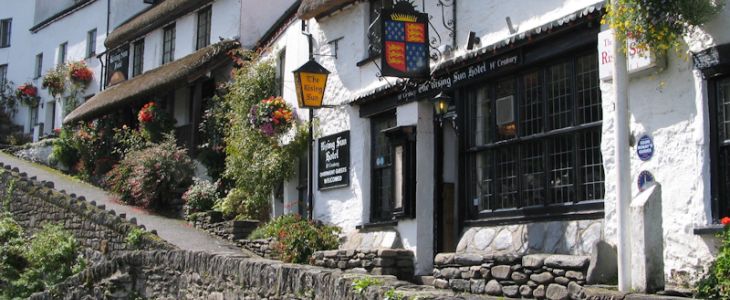
Interesting and Delightful Facts About the UK That Will Make Your Day
The United Kingdom is a very interesting place to live and study. I’ve compiled a list of some of the more interesting facts about the UK you may not already know. While none of these will overly affect your studies, they do show the interesting flavor of British culture that you will grow to love while studying in the UK!
What is a 'pub'?
The word “pub” is short for “public house,” and the tradition has only officially been around since the 19th century. However, places selling beer have been around for much longer, and the “oldest pub in Britain” is a hotly contested title. One of Britain’s oldest pubs, with the papers to prove it, is Ye Olde Trip to Jerusalem in Nottingham, which was serving ale to departing crusaders in the 12th century. The Royalist Hotel in Stow-on-the-Wold in Gloucestershire claims to have been selling beer since around A.D. 947, while another pub, Ye Olde Fighting Cocks in St. Albans in Hertfordshire, claims to date back to the 8th century, although 13th seems more likely.
'Hill walker' Over 'Hiker'
At the end of the 19th century, an eager hill walker named Sir Hugh Munro published a list of 545 Scottish mountains measuring over 3,000 feet (914 m) high. New surveys have revised this to 283. Today, any Scottish mountain over the magical 3,000-ft mark is called a “Munro,” and many hill walkers now set themselves the target of “bagging,” or summiting all 283.
Who Says They're Fictional?
The Scottish national animal is the Unicorn. Why a creature that doesn’t even exist? The unicorn was chosen because it was seen as a proud and haughty beast which would rather die than be captured, just as Scots would fight to remain sovereign and unconquered. Two unicorns supported the royal arms of the King of Scots, and since the 1707 union of England and Scotland, the royal arms of the United Kingdom have been supported by a unicorn along with an English lion.
Unique British Food
There are a number of traditional British foods with very odd and unappetizing names. For example, ‘toad in the hole’ looks and tastes much better than it sounds. It is simply sausages in Yorkshire pudding, named so because apparently (to some) it looks like toads popping up from a hole. You can also eat ‘spotted dick’ in England, and snigger while doing so. This is a dried fruit and suet pudding popularly served with custard in Britain. The word ‘dick’ doesn’t mean what you think it means; it’s likely just a corruption of the word ‘dough’. ‘Cullen skink’ is nothing odder than a thick haddock, onion and potato soup originally from the Scottish town of Cullen, and ‘Welsh Rabbit’ or ‘Rarebit’ is nothing but melted cheese on toast – the original name is really a silly and patronizing dig at the Welsh.
When you can't eat it, chase it
Cheese Rolling is one of the oldest customs to have survived in Great Britain. It's been going on for hundreds of years and some say it has roots in pre-Roman times. Every year, a 7 lbs. round of Double Gloucester cheese is rolled from the top of Cooper’s Hill in Gloucestershire, England, with competitors racing downhill after it. The first person over the finish line at the bottom of the hill wins the cheese. Roller beware: participants often end up full of scrapes and bruises, and occasionally even broken bones!
I hope these interesting facts about the UK have given you a taste for how very unique and delightful British culture is. Studying and living in the UK is quite an adventure, and you’ll find that you’re constantly learning new things about your adoptive country, and hopefully you fall in love with it as much as I have!

Why Study Law in the UK?
Law is one of Across the Pond’s most popular subjects for Canadian students. Have you thought about studying Law in the UK but you don’t know if it’s a good option? Here are some of the top reasons why you should consider studying Law in the UK:
Shorter Degrees
The qualifying law degree in the UK is referred to as an LLB, which is equivalent to an LLB or JD degree in Canada. The program normally takes 3 years to complete with 2 years of compulsory modules and 1 year of electives. However, many universities offer a 2 year LLB program for students who have already completed an undergraduate degree; this program includes all compulsory modules but no electives. This means, if you already have an undergraduate degree you could have your law degree in as little as two years!
More Options
Since the UK is home to many more universities than Canada, there are a wider range of options to choose from. You can study in England, Scotland, Wales, or Northern Ireland. Since we work with a wide range of universities, the entry requirements vary. Generally speaking, they are much for less competitive than they are in Canada.
Simple Application Process
Applying to UK universities is fairly straightforward and much more inexpensive than applying in Canada. Applications for law schools in the UK are on one centralized application called UCAS - meaning you only need to submit one application! You can apply to a maximum of 5UK universities for which is approximately $50. In Canada, you are looking at way more in application fees! Also, don’t like exams? UK universities don’t require the LSAT!
International Experience
Employers tend to look quite favourably upon an international education. Indeed, a job applicant with an international degree is able to show that they have international experience, which is highly valuable in our more globalized society. In addition, it proves they are adaptable, open-minded, independent, and self-sufficient.
Opportunities for Extra Activities
Most of Across the Pond’s partner universities offer extra activities that will make your experience even better, such as:
- On-Campus Law Clinic
- Mooting Opportunities
- Courtroom Facilities
- Professional Training Placements
- Relationships with local legal practitioners
Pursue an LLM to specialize
An LLM is a one year master’s of law and is equivalent to an LLM in Canada. We recommend considering pursuing an LLM after completing an LLB in order to specialize in a particular area of law while earning a post-graduate level qualification. Popular LLMs include:
- Criminal law
- Human Rights law
- Commercial Law
- Environmental Law
- Maritime Law
- International Law
- Family Law
- And more!
The best part is - applications for international students (with some exceptions) are open until June 30th each year!