






Quirky Spots to Visit in London
Not only is London the biggest financial Hub in the UK, it has been termed the world’s most innovative and influential global city. While there is no shortage of sights to see and things to do upon your first visit here, I’ve outlined some must see spots within London that are more off the beaten path.
Markets
There are currently around 280 markets in London, some outdoors, some indoors, and ranging from selling food to groceries to vintage clothing. While some smaller markets are only open on the weekend the following are open 7 day a week.
Brick Lane Market
Not only home to an international food hall, this market is also home to one of the largest vintage clothing markets in London. Underneath the main food hall you will see a neon lined stairway leading to an underground vintage clothing paradise! On days with good weather the market spills outside into the main courtyard with food trucks and other creative vendors.

Borough Market
Located right under London bridge, Borough Market is quite large and popular on weekends as they sell a variety of produce, cheese and meats that are harder to find in the grocery shops.
The exterior of Bridget Jones’ flat from the movie series can be seen here, as well as the exterior of the ‘Leaky Cauldron’ bar from Harry Potter and the Prisoner of Azkaban!
Camden Market
One of the larger and more permanent markets in London, Camden market is comprised of shops rather than pop up stalls. Stables Market within Camden market has vendors selling out of what used to be horse stalls for the Pickford Horse Hospital and guests can find unique clothes, food and décor in the area. Surrounded by a network of canals and home to influential musicians such as Amy Winehouse and The WHO, Camden is a unique area popular for its rock music influence and is a London must-see!
Pop Brixton and BoxPark
Pop Brixton is a food and drink market located in Brixton. The entire market is self contained and made out of stacked shipping containers. Popular on a night out, visitors are ID’d at the door upon entry and are able to flow freely between restaurants, beer gardens, a small dining hall and a dancehall.
Located in Shoreditch, BoxPark has the same idea as POPBrixton but is a retail space as opposed to a food and drink spot.
Café’s and restaurants
God’s Own Junkyard
God’s Own Junkyard is a spot that screams Quirky. The shop is home to the largest stock of vintage and neon signs in all of Europe. Its free to enter and visitors can grab a bite to eat next door at the Rolling Stones café.
The Breakfast Club
A chain of restaurants serving all day breakfast around the city at a reasonable price. But before you go, be sure to check out each location’s website prior to arrival, as many of them operate secret bars within the restaurant, accessible by stating a secret phrase to the host.
Churchill Arms
Very well landscaped flower covered pub near Hyde park that boasts great pub style food and excellent photo opportunities!
Dans Le Noir- Farringdon
Diners eat in the dark and served by blind staff. The restaurant’s website describes it as a ‘Unique sensory experience that allows you to re-evaluate your perception of taste as this sense is heightened with the absence of sight’. Definitely a cool experience!
Scenic/ Tourist
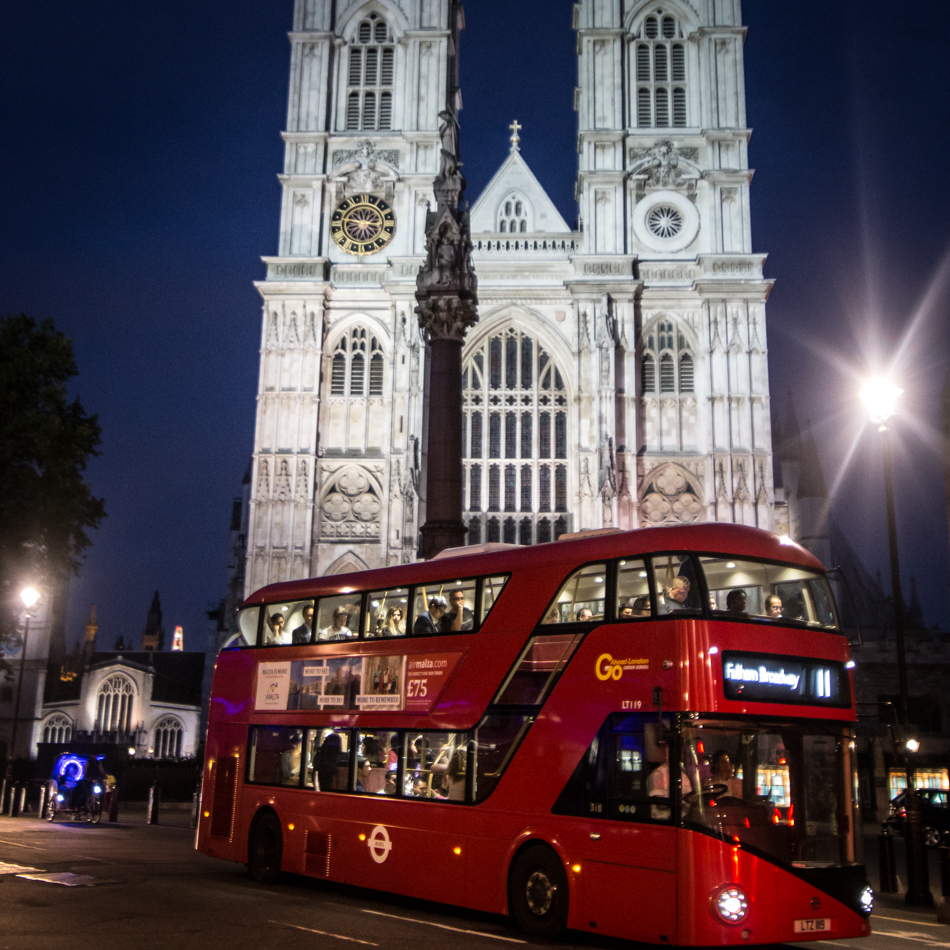
Getting Around
The transportation system in London was designed to be efficient, considering it transports around 2 million people each day on busses and tubes. When out sightseeing an alternative to using London transportation is to purchase a ticket for a private hop-on-hop-off bus system whose routes are designed to showcase the city’s top attractions and sights. While these tickets can be pricey, I would suggest taking a ride on the DLR line or the London Overground. For the price of normal subway fares, you can ride these Overground tube’s which provide a good view of the city from above and have a couple lines each, allowing you to do the whole network for a max daily rate.
Vauxhall City Farm
A notable quality of London is the lack of green spaces and nature outside of the designated parks as the city is so populated. In addition to Regent’s Park and Hyde Parks in central London, be sure to check out Vauxhall City farm just a 5-minute walk south of the river Thames. For a donation, guests are invited into the farm run by volunteers and able to participate in the petting zoo and learn about all the farm animals they have there. There is also a small restaurant guests can grab a bite to eat at, or a hot drink on a chilly day (as its open all year round)
Roman Temple of Mithras
The city of London is over 2000 years old and is full of history and culture. Although it is not hard to forget whilst walking around and admiring the architecture of the old buildings in central London, the Roman Temple of Mithras is a sure reminder of the city’s age. Just south of central Bank station, a Mithreum temple was discovered under one of the city’s busy streets in 1954 prior to a building’s construction that dates back to the 3rd century Romans!

My Experience Choosing a Dissertation Topic
One of the first questions I had when applying for my masters was what the dissertation process would be like. I had written a thesis in my undergraduate and so while I was familiar with the process at my university in Canada, I was unsure of how it would be for a master’s course in the UK. While I can’t speak for all universities, this was my experience at Newcastle University studying for an MSc Foundations in Clinical Psychology.
Supervisor Selection
Towards the end of semester one a PDF was sent out to all students with a list of people who were willing to take on students for a dissertation. Some of these people had pre-established projects and were looking for students to take on one of their projects and others had broad research interests and were willing to take students for their own project ideas. While this helps for students who do not have any strong research interests or a specific project in mind, it is a bit harder for someone with a specific idea to find a project with this kind of system. I have specific research interests so the options for supervisors in my area was very minimal. I went to one meeting for someone in my area of interest, but so did 20+ other interested students. It turned out that she was only willing to take 2 students and with over 20 of us looking to go onto the project, I was not one of them. Since she was my only option for a project in my specific area, I was left without a project and no ideas. This is how I went from having no project and no ideas, to getting a dissertation project I am very happy with.
My Experience
I began contacting other supervisors who studied areas that I am interested in. My main interest is on childhood illness, but because I am also interested in anxiety, disordered eating, a developmental disorders, I started contacting other researchers in these areas. After contacting dozens of faculty members and going to many meetings I started to narrow down my options to 3. Some of the faculty members had already taken on student and didn’t have room for another, and some had projects that I didn’t see myself enjoying working on, so this also factored into my decision.
After having 3 projects that I had an interest in I had to make a decision. What ultimately led to my final decision was which would give me the most relevant experience for my future studies and future career. One of these three projects involved being trained to deliver an intervention and this largely is what drove my decision in choosing the topic.
My course has about 70 students, which is the largest year yet and double what they had last year. This means that way more people were competing for a dissertation with the same amount of faculty as previous years. With most faculty only taking 2 or 3 students it seemed that rejections were more common than getting a project. But with that being said, this was my experience and different programs and different universities may have less students or more faculty. Choosing a dissertation was a very stressful few weeks, but in the end all 70 of us landed on a project.
Tips for choosing a dissertation
- Remember you will be spending a lot of time on this project, so don’t just agree to something to have a project. Make sure it’s something you have at least some interest in.
- If your project isn’t exactly what you want to do out of school don’t worry. The main point of the dissertation is just to get experience.
- Try not to stress too much. While choosing a project may be hard and things may not go as planned, you will end up with a project.
- Go into it with an open mind. While your project may not be perfect or ideal, it can still be something you end up happy with.
- Contact many people and start the process early! The sooner you start contacting supervisors the better your chances are to get onto a high demand project.

The Best Free (or Cheap) Activities to do as a Student in the UK
Something that I remember fondly from my time in the UK are free or affordable activities to do as a student! Being a student, I was very conscious of my budget, so I discovered a lot that I could do while not spending too much (or anything at all).
I lived in London, so I will detail some free activities to do as a student there first. Further on I talk about the rest of the UK!
Free activities in London
There are a multitude of free activities in the UK, particularly in London, depending on your interests:
Museums/Galleries – I studied history, so I spent a lot of my time in the free museums of London. There is the option for a donation upon entry, but you are not obligated to do so. My favourites included:
- The Victoria and Albert Museum (free)
- The British Museum (free)
- The National Gallery (free)
- The National Portrait Gallery (free)
- Museum of London (free)
- Museum of London Docklands (free)
- Natural History Museum (free)
- National Maritime Museum (free)
- The Queen’s House (free)
- Sir John Soane’s Museum (free)
- The Royal Observatory (free)
- The Wallace Collection (free)
- … I could go on and on! There are SO many free museums in London!
Sky Garden – Forget the Shard! If you want some amazing 360 degree views of London, while exploring a beautiful public garden (at the top of a skyscraper), the Sky Garden is a must-visit and it’s FREE admission! You must book in advance online for a visit slot, but it is free to do so.
Parks and green spaces – One of my favourite things to do in London was visit the parks and greenspaces for a stroll, or even a picnic. Pick up some cheap snacks and visit any one of my favourite spots:
- Hyde Park/Kensington Gardens
- Hampstead Heath
- Green Park
- St. James’s Park
- The Regent’s Park
- Greenwich Park
- Richmond Park
- Lincoln’s Inn Fields
- Hampstead Heath, London
- Lacock Abbey, near Chippenham
Affordable activities across the UK
Inexpensive day trips – if you book well enough in advance, you can get the train or a coach bus to anywhere in the UK, whether a short or longer trip. I did this many times for well under £20, and would just explore new towns and cities for free. They often have free attractions as well, and the only things you need to pay for are the ticket there and a spot of lunch!
Theatre/Music - most theatres and concert halls offer student priced tickets that are MUCH cheaper than a standard admission price! I saw plays and musicals for as little as £5-15. Look for "concession" prices or student prices before buying!
National Trust, Historic Scotland, or English Heritage properties – so many of the UK’s amazing properties and estates are incredibly inexpensive to visit, and also offer student discounts on their entry fees. Some of my favourites I was able to visit were:
- Prior Park Landscape Gardens, Bath
- Bath Assembly Rooms, Bath
- Lacock Abbey, near Chippenham
- Saltram House, Plymouth
- The White Cliffs of Dover, Kent
- Chiswick House, London
- Edinburgh Castle, Edinburgh
- Kisimul Castle, Isle of Barra
- Clava Carins, near Inverness
- Prior Park Landscape Gardens
- Bath Assembly Rooms
Hiking – I loved hiking in the UK. There are so many stunning places to take a hike, whether you want to spend one hour or several!
Student discount schemes – There are a ton of student schemes and discount cards available to you in London and the whole of the UK. This includes UNiDAYS (discounts on almost everything!), tastecard (save money on food!), Totum (formerly National Union of Students) card, student passes for transportation, and student prices on membership cards to the historic and heritage organizations I mentioned above.
As you can see there are a multitude of cheap or free activities to do as a student in the UK! Take advantage while you’re studying in the UK – you will not regret it!

Studying in the UK vs Studying in Canada
Studying in the UK is slightly different from studying in Canada. It takes some adjusting, but you can definitely get used to the different class schedules, fashion, and layout in no time! The following is based on my experience as a Canadian Masters student who did her entire undergrad in Canada, so it may not be universally true. Read on for the difference’s I’ve spotted!
Fashion
First of all, before we get into the actual educational experience, I have to say: the fashion over here is different. In Canada, it isn’t out of the ordinary to see students show up to class in sweatpants, or pyjamas, but that is not the case in the UK. Everyone looks their best. There are always girls in my class wearing a dress or skirts, and at the very least, everyone is in jeans. It’s still casual, but not to the level of casual students take it to in Canada. I think if I actually showed up to class in sweatpants here, people would be concerned for my health. I guess what I’m saying is: be prepared to put in a bit more effort into your look that was expected in Canada.
Marking criteria
In Canada I was marked with a percentage, GPA, and letter grades. Here it’s a little different. For my postgraduate course there are 3 categories that your marks can fall into; Pass, merit, or distinction. The major difference is by what is considered merit or distinction. While 50 is still considered a pass, for my course a merit is 60-70 and a distinction is 70 and above. As well, the grading scheme only goes up to 90. Getting a 60 is considered rather good and many people don’t even get above a 70 whereas in Canada getting a 70 was often an average grade. I must admit it has been difficult getting used to seeing a low number and associating it with a good grade.
Exam and semester dates
Back home my undergraduate exams would happen in December before Christmas and second semester would start in January when you return from the break. Here my exams are in January after I return for Christmas and second semester doesn’t start until the very end of January. As well, first semester started in October.
Weight of assignments
This has been very difficult to get used to. Back home one class would have multiple assignments, 1 or 2 midterms, and a final exam. This meant that everything would be worth less. Final exams were typically worth 25% and you could go into it with a high grade due to previous assignments, midterms, and attendance increasing your overall grade. Here, I have two classes where there’s one assignment worth 100%. Another class had two assignments worth 50% each, and one class had an assignment worth 25% leaving the final exam worth 75%. This has been really hard to get used to as you only have one chance to do well and your entire grade falls on one assignment/ exam. However, on the plus side it makes for fewer due dates and less work throughout the term.
Class schedule
In Canadian universities, classes can start as early as 8am and go until 10pm. That is not the case in the UK. At least at my school, they have a strict 9-6 rule, and all classes are scheduled within that time frame. No more super late or super early classes, yay! This was definitely an unexpected bonus when I moved to the UK.
In Canada, university students build their own schedules based on the classes they want to take. With most universities in the UK you have a dictated schedule of classes you have to take, and you maybe get to choose one or two electives from a provided list, depending on your program. It was nice not to have to plan out my classes, but I kind of miss the freedom it brought. I know that my undergraduate degree had an unusual amount of freedom for choosing courses (I only had 1 required class, and then I got to pick the rest from different categories. As long as the category requirements were filled, I could graduate), but it is something that I miss while studying in the UK.
As well, my course has a scheduled lunch break, which is so nice. Every day we have at least an hour for lunch, which means I don’t have to schedule it in myself! Also, they plan times for clubs and activities. At my school in Canada, clubs and practices took place either before or after class hours, meaning that they were either before 8am or after 10pm. Those hours were not conducive for getting a full nights’ sleep. Here, Wednesday afternoons (again, at my school) are set aside for activities like that to take place, and no classes are scheduled for Wednesday afternoons! It’s a nice midweek break.
Staying Organized
In the UK it is expected that you do a lot of organizational work yourself, and really keep on top of your deadlines and assignments. As well, I’ve had to do a lot of assignments that weren’t marked, and participation grades are not a thing here, in my experience. I really miss those a 10% attendance marks, I’m not going to lie.
School Spirit
If you’re a person that loves school spirit and sporting events, the UK may disappoint you. Homecoming, school wide St. Paddy’s celebrations, and school spirit events are not really a thing here, but that doesn’t mean that students don’t have school spirit; they just show it in a different way. You may not be attending tailgate parties for Homecoming football games, but you can still get involved and go to the pub on weekends. It’s much more toned down, but people still love their universities here.
While there are many differences that I have come across since studying in England, overall the experience hasn’t been anything too shocking and these differences are all part of this adventure. Some have taken some getting used to (assignments worth 100%) where others I have happily taken on (schedules made up for you). If this has made you curious as to what studying in the UK would be like, then contact an Across the Pond advisor to get started on your applications!

Why You Should Consider Studying Outside London
London is an amazing city full of history, there’s no denying that. There is so much to do, so much to see, and it’s the capital of England. What’s not to love? It’s so amazing, that people often forget there are other cities that are just as, if not more, amazing in the UK. This is a list of reasons why you should consider studying outside of London, and maybe consider some other cities (or countries!) to be your home away from home!
The Cost
Let’s just get this one out of the way. Studying in the UK is expensive no matter what, but the cost of living in London is the highest. Why not look at other cities with lower costs of living, save some money, and then use it for a trip to London instead?
Going out on the town, transportation and eating out is easier in smaller university cities, where everything is within a five to ten minute walk. Although London has a ton of public transportation, it involves travel costs to get around.
Commute
There are so many cities in the UK that have simpler transportation for you to get to and from campus. I studied in Edinburgh, and never once got stuck in rush hour traffic. Why spend time stuck in London traffic when you could be studying (or really, out exploring)?
Meet the Locals
Whether you study in a smaller city or more rural area in the countryside, the locals of these places are some of the friendliest and most welcoming people in the world. Studying outside of London will give you lifelong friends with locals who can show you around their homeland and give you a real British experience.
Landscape
Sure, London is a beautiful city, but does it have the hills of Scotland or scenery of Wales? Living in cities like Edinburgh, Cardiff, Belfast, Newcastle, and many more, it is so much easier to escape the city and spend the day out in nature, just exploring.
Travel
London is in the South of England, so it’s pretty far to travel to get to other parts of the UK. You could go to school somewhere like York, in the middle of England, and be able to travel easily to London, but also to Scotland, Wales, and tons of cities throughout the UK. Sure, you can fly almost anywhere from London, but wouldn’t you rather be able to take a day trip on the train to another city?
Tourists
London is a very touristy city. That’s probably why you want to study there, right? Sure, there’s a ton to see, and the Royal Family is super close by, but ultimately, you are in the UK to study. Maybe you want to go to a university where you won’t have to push through crowds of tourists to get to class, and there are plenty of other cities in the UK that are great for this! Glasgow, Aberdeen, Leeds, Essex, and more are all beautiful cities full of things to do and see, without the overpopulation. Go to London to be a tourist, not to dodge them!
Originality
London is a pretty great city, which is why everyone wants to study there. Why not check out a school or city that maybe isn’t as studied at, and have even more amazing stories for your family and friends back home! Sure, maybe no one you know has ever heard of Chester, but they’ll be dying to go by the time you’ve finished studying there. See new parts of the world, and learn something new about the UK; there’s more to it than just London!
Ultimately, the choice is yours. London is an amazing city, and if that’s what your heart is set on, good for you! Just know, there are so many cities in the UK that have so much to offer, and you should give those a chance!

 The start of the Christmas season is marked in different ways for different people. Many of us in Canada have grown up with the notion that decorating your house with lights and tinsel is a good way to get into the holiday spirit. Maybe you have even driven around with your family looking at other decorated houses in your neighbourhood.
 le, check out Winter Wonderland in central London. Located in London’s Hyde Park every holiday season, this massive carnival includes opportunities to do some shopping, rides, carnival eats and other fun activities.