





Image


I have been living in North East England for just over a month now and it has been nothing but excitement ever since. While my university had an airport service for international students, I decided to come a week early to start settling in before the semester began. I was lucky enough to travel with both my mom and grandma to make the transition a little more bearable and to have additional support with moving in and getting familiar with my new city.
I was nervous traveling and entering the country on a visa as I had never done anything like this before. I had the idea in my mind that it would be a long and complicated process to enter the country. Thanks to my advisor I was prepared for anything and had all my documents ready to speak with an immigration officer at the airport. Despite my concern, it was a rather smooth process. The whole thing only took a total of maybe 10 minutes. There were only 2 other people ahead of me, and once I got up to the officer all I was asked was for my passport and visa. I can’t speak for everyone but for me it was quick and painless arriving on a visa.
Since I arrived one week before my move in date, I stayed at a hotel for the time being. This gave me the opportunity to explore the city/ campus and to run some necessary errands before the stress of the semester began. I used this time to set up a SIM card for my phone, to open a UK student banking account, and to pick up my biometric residence permit. I also got to explore the Newcastle Castle, visit the Quayside Sunday Market and, I even got some traveling in during that first week.
Before classes begin, universities here have what is called Freshers’ week. This is about a 10 day stretch where students are able to go to various events on campus, in the city, and in the general area/ county. While I didn’t attend any of the actual Freshers’ events the university also held a variety of welcome events specifically for international students. One of the events they held was a pizza party for all the international postgraduate students in my faculty. This was an awesome opportunity to meet other international students who are also studying in courses similar to my own. At this event I even met a girl who was from the same province as I am! As well as the events going on all week, they also had a bunch of companies on campus giving out free coupons and food, and had fairs for joining clubs, or finding a job in the city centre. This whole week was a great way to feel welcome on campus and even having only attended one event, all of the energy and people on campus really made me feel like I had made the right decision coming here.
The best part of this experience so far has been simply the change of scenery. Every day I walk to class and pass churches and castles that are older than Canada itself. In the same amount of time it would take me to drive to the closest city at home I am able to travel to different countries.
If I was to recommend 5 things for students who will be coming to the UK next fall it would be to try and travel with a friend or family member, to fly through the night to try and avoid jetlag, attend at least one even during welcome/ Freshers’ week, take the opportunity to travel and explore your new country/ city.
-Kaley
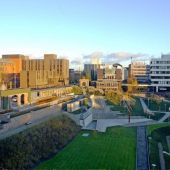
My first week in Glasgow was filled with new places, jetlag, unique and delicious foods, jetlag, breathtaking sights, and more jetlag.
Things didn’t get off to the best start though. Due to a mixture of excitement and nerves, I was unable to sleep on my overnight flight over from Canada. Excitement soon turned into bleary-eyed exhaustion, but when the plane began its descent to Glasgow, I started to see the rolling mountains, and the butterflies in my stomach were fluttering like it was the mating season. I kept thinking, "I'm here! I made it!" and that feeling made the sleep deprivation worth it… just.
I was sad to leave my friends and family, but I was looking forward to studying Information and Library Studies at the University of Strathclyde, a long-term goal for my career development. On top of that, I’d be living with my partner, who had moved up from the North West of England, so at least I’d have someone who can half understand the accent.
I’ve never lived in a foreign country before, so it was only natural to feel a little apprehensive, but with the journey out of the way, I could embrace being an international student in a new country. On the car ride to my new home, I was in awe at the rolling hills that encompassed Scotland, it almost took my breath away. I felt so lucky that I could call this place home for the next year and also proud of myself for taking this on.
I had arrived a month before classes started, so welcome week orientation hadn't begun yet. But there was plenty to check out in Glasgow before my course started. I decided to use this time before classes started to take in local sights and familiarize myself with Glasgow, including the University Campus and a few museums. The Kelvingrove Art Gallery and Museum was pretty spectacular, and as a future librarian, it was great to check out The Mitchell Library, one of the largest libraries in Europe.
Although I was sleep-deprived the first week, I was still able to spend some time in the great outdoors. We visited Loch Lomond and hiked up Conic Hill - a manageable two- to three-hour hike that’s perfect if you’re suffering from jetlag and not ready for a full day excursion. Unfortunately, I wore what I believed to be a waterproof jacket for the hike, and it turns out what’s waterproof in Canada isn’t cut out for Scottish rain. My so-called rain jacket began absorbing the water instead of repelling it and I was distressed to realize that I had become a sponge. Still, I was determined to make it to the top, and I don't know if that was the delirium from the lack of sleep or my sheer will, but somehow I did. As I continued taking on water, I was nevertheless blown away by the sights along the route. The lochs (Scottish term for lake) and mountains were a sight to see, and I couldn’t believe how fortunate I was to have all this so close to home. After the hike, we headed straight into a warm, cozy pub-restaurant where I tried Haggis for the first time, and I was pleasantly surprised at how delicious it was! I look forward to having it again, just so long as no one tells me how it’s made.
Staying fit is important to me, and by far my favourite way to do so is through boxing, so it was important that I found a great gym for the year. Thankfully, Glasgow is well served for aspiring pugilists, with a number of great boxing and kickboxing gyms around the city, as well as the extremely convenient 9ROUND which offers a lung-busting 30-minute workout that’s perfect when you’re short on time.
Over the course of the week, we also managed to take in a football game, go to the cinema, and eat out probably more than we should. I look back at my first week in Scotland with the fondest, albeit somewhat foggy memories. Throughout this time, I just kept thinking of how lucky I was to be living here.
I recommend students to look at Scotland when they are thinking about studying in the UK. Scotland has so much to offer international students, from its rich culture to majestic scenery. If you're thinking about studying in the UK, maybe even Scotland, please contact an Across the Pond student advisor for more information.
- Jaclyn
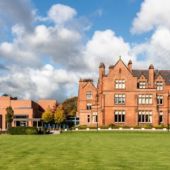
My journey to the United Kingdom didn’t start off as smoothly as I had imagined. Before I had booked my flight, I experienced some technical difficulties with my visa application, causing me to miss my orientation week, and as a result miss out on some vital information, which I will discuss later. However, for some reason I was not stressed. Maybe it was due to the excitement of living in the UK, or maybe that fact I was finally able to start law school, I was not worried. It was also reassuring to know, that if I had any questions, I could turn to my advisor at Across the Pond, and she would be able to assist my or direct me to someone who could.
Once my visa had arrived, I booked my flight right away. Before I knew it I was on a plane, and had embarked on my journey to the UK, specifically Belfast. After one connecting flight and waiting in several lines, or queues as they are referred to in the UK, I had arrived in Belfast. The border officer was nothing but kind and extremely helpful. She thoroughly went over the aspects of my student visa, which I had already known but appreciated nonetheless, and informed me what would happen if I did not pick up my biometric residence permit (BRP). Once I had promised her I would pick it up within the time period, she gave me the stamp of approval, literally, and I was on my way to start this new chapter of my life.
As I mentioned earlier, I had missed the international orientation at Queens University Belfast, but since I had emailed international admissions before my arrival, they were able to guide me through what I needed to complete.
After I had recovered from jet lag, which took me an entire day and night, I set out to explore my new home, but most importantly complete the immigration check for the school. The first step was finding the building. I decided to stop by the international students office to ask for help, and see if there was anything else I needed to complete. They two individuals at the reception were very helpful and informative. The most important piece of information I took away was the Queen’s University App that showed me all the events that Queen’s was hosting, as well as a map of where all the buildings were. An extra benefit; I got a free tote bag!
Once I casually made my way to the building where the immigration check was happening, I found signs everywhere directing me where to go. The process was simple and efficient. At each step, student volunteers were eager to help and guide me through the process to ensure everything was completed correctly. Further, I was able to pick up my BRP here, and receive my student card for which my picture was taken right then and there. All in all, I was very impressed with the system that the University had in place to complete the immigration check, and on top of that, the patience that the staff members and student volunteers had to help international students.
Overall my first few days were quite eventful. I was able to complete the important and required immigration paperwork, but also walk around the campus and familiarise myself with all the different areas of it. I must say I am quite comfortable exploring and wandering on my own, which allowed the first few days to be enjoyable, even though I was alone. If you are not comfortable being alone, I would highly recommend the orientation weeks, in order for you to meet new people, and have someone to explore with. One of my favourite things is discovering something new a daily basis. Whether it is a new fun bar, or a new quaint street, the discoveries are endless. You too, could be on this journey. The first step is to reach out to Across the Pond, and contact an advisor today.
- Bleen

I knew I wanted to study abroad since high school. After visiting a few historic universities while on a trip to Spain I knew I would one day move to somewhere in Europe to study. I have family who studied in the UK and while Spain was my inspiration to study abroad, the UK was always in the back of my mind. When I saw Across the Pond at my university’s postgraduate studies fair, I immediately knew I had to connect with an advisor to start my application process.
The UK is a great place to study and there are many reasons I ultimately decided to come here to complete my MSc.
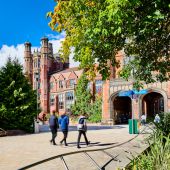
This time last year I was weeks away from moving to England for a yearlong master’s programme. One year later, I am weeks away from my completing my master’s. Despite everything that happened this year, my thoughts on living/ studying in the UK remain that it is an incredible experience and absolutely worth it for anyone that has a desire to study here.
After months of applications and planning I finally arrived in Newcastle. I decided to come about 10 days early with family to travel and settle in before starting school. I think this is a great idea to anyone who is able do this, as it really helps to ease into life in the UK. The first month here consisted of travel, setting up my bank account, getting a UK phone number, registering with a GP, and attending international student events.
The first semester of my master’s consisted of required modules. This gave me the opportunity to learn about the foundations of clinical psychology, cultural and professional issues that may arise in my future career, and about developing interventions to encourage healthy behaviour change. First semester was also spent getting used to university in the UK, especially with how assignments are graded. Despite being busy with school I still found time to visit London, attend the Edinburgh Christmas Market, and with a month off school for Christmas I was even able to come back to Canada.
Second semester was when dissertation work began and when I could take modules of my choosing. My course had a large class size so getting a supervisor was rather competitive, however this is by no means the case for all programmes. I also learned a lot more directly relevant information such as therapy, developmental disorders, and even had an apprenticeship where I worked in a research team. Second semester also has a month-long break.
The summer semester has no lectures and is completely dedicated to writing your dissertation. Thanks to lockdown and not being able to collect additional data I was able to dedicate most of my time to writing my dissertation, and everyone was given an extension on our projects. While this was definitely not an ideal situation, everything has turned out completely fine! I am now two weeks away from submitting my dissertation, the UK is opening back up, and life is progressively going back to ‘normal’.
With only two weeks left of school I have been thinking about how fast this time has gone and what a crazy year this ended up being. I am still finishing the year with a master’s that prepared me to get a job in my desired field and is the perfect next step to eventually completing a doctorate. Even after everything that has happened, moving to the UK was still an amazing experience and absolutely worth it; so much so that I have decided to take my adventures to Scotland to spend another year in the UK.
-Kaley
Are you considering studying law in the UK? Is the number of options in the UK overwhelming you? Studying Law in the UK is a popular route for Canadian students, but studying in a new country is a big commitment. Join our advising team as they go over the things to consider when choosing a UK law school, including cost, opportunities, classes, and how to apply, to help you narrow down your options! Studying abroad is a big decision, so join us as we discuss the criteria to consider when choosing which universities to apply to for law, and choosing which offer to accept!
When you study law in the UK, there are a few things to consider, such as: entry requirements, university facilities, location, cost, and type programme. Tune in to find out more about what you should be looking for, and how your advisor can assist with narrowing down your list, and applying!
Not only will this webinar help with choosing where to apply, it can help you narrow down which offer to accept once you have applied!

Studying in the UK is an amazing opportunity, but it can also be an expensive one. Between tuition, accommodation, travel, and visas, most students will be on a budget while studying. While studying in the UK, your biggest expense will likely be tuition, but the cost of living can greatly differ depending on where you study – not just between England, Scotland, Wales and Northern Ireland, but individual cities as well! We’ve put together a list of the most affordable cities in the UK for students, to help you narrow down where you would like to study!
*All recommendations accurate as of April 2026
When most students think of an English city, they think of London – this is totally fair, it is the capital, but it is also the most expensive place to live in the UK. Why not check out some of these other cities and towns, which are more affordable, and save London for some day trips!
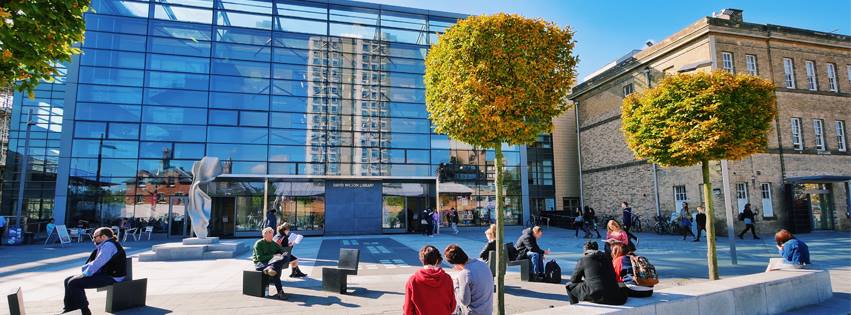 Leicester
Already wildly popular with Canadians for their Law programme at University of Leicester, Leicester has one of the lowest costs of living in the UK. Save some money on living expenses, and check out this town, which even has a Tim Horton’s! Leicester houses two universities, University of Leicester and De Montfort University, so plenty of options for programs!
Located in Northern England, Sheffield has one of the lowest costs of living in England, and also has the benefit of being a city! Not only do they have lower cost of living in general, they also have plenty of free student activities, or discounted entry; saving money where you can as a student is important! The University of Sheffield is part of the prestigious Russell Group, so you can attend a university with a global reputation for excellence while also saving some money!
Scotland is well known for their beautiful cities and scenery, whisky and gin, and unique culture. While some Scottish cities can be quite expensive (like Edinburgh), you can get the same charm in these Scottish cities, while saving some money for day trips to Edinburgh Castle!
Located in the beautiful Scottish Highlands, Aberdeen is a small city with a lot of charm. Known as the granite city, the whole city sparkles when the sunshine hits – and don’t let the rumours fool you, they do get sunshine! The city houses two universities: University of Aberdeen, founded in 1495 and one of the oldest cities in the world, and Robert Gordon University, which is very popular with Canadians wanting to go into professional health programmes! If you love nature, you’ll love Aberdeen – plenty of walks, castles, and hikes are a short drive away!
Located on the River Tay, Dundee is a small, picturesque city with lots to offer. Known as the sunniest city in Scotland, Dundee has a great balance of city attractions and nature, with views of the river and Scottish Lowlands from all around. Previously part of St. Andrew’s University, University of Dundee has a long history, and is well known for some very niche courses – ask your advisor for more information!
Wales is constantly heralded as a beautiful place, something our advisors can attest to. Why not get away from the hustle and bustle of a big city, and study in nature, surrounded by a unique culture, while also saving some money!
 Aberystwyth
One of the least expensive places to live in the UK, Aberystwyth is also beautifully located right on the coast. Not only that, but Aberystwyth University has an accommodation scholarship, to help students save even more money while living in the UK! Why follow in the footsteps of the royal family: King Charles III famously studied in Aberystwyth in 1969.
Also in Wales, Cardiff has many options for students! Located right on the border with England, you can easily travel to other cities, or out into the natural beauty of the Welsh countryside. If you’re looking for a bigger city than Aberystwyth, but don’t want to pay London prices, Cardiff could be the perfect fit! Cardiff has campuses for Cardiff University (another Russell Group member) and University of South Wales, so you’re sure to find the perfect course while saving some money on living!
In general, Northern Ireland is one of the cheapest places to live in the UK. With beautiful scenery and easy travel to the EU, there’s lots to see and love about Northern Ireland!

Belfast has one of the cheapest costs of living in the entire UK, making it a great place for students to study! They have two universities in the city: Queen’s University Belfast, a member of the Russell Group, and Ulster University. Why not study in a place full of history and surrounded by nature, and save some money while doing so?
When you’re moving so far from home, where you study is almost as important as what you study. While money is always a concern, you don’t want to be stressing about affording groceries while studying for finals, so choosing a city with a lower cost of living can help alleviate some of that anxiety.
We are happy to hear that you're interested in meeting with one of our partner university representatives in Canada.

Thinking of studying at London Metropolitan University? Connect with London Metropolitan's North American representative Tara Murphy to discuss your study options and answer any questions you may have about the university.
Register your information below to access a booking link and secure an appointment.


Privacy & Data Protection Policy | Cookies Policy | Anti-Slavery & Human Trafficking Statement | Terms & Conditions | Agent Quality Framework (AQF) | Vacancies
2026
Copyright © Across the Pond - Study in Britain Ltd. All rights reserved.